
Executive Summary
As a two person team, we created a 5 pamphlet booklet series targeted towards entry-level UX design professionals with accompanying digital adaptations. The overall goal of the series is to extend awareness of UX design, UI design, contextual research, human centered interaction (HCI), and/or user centric design. We partnered with a hypothetical client, South by Southwest (SXSW), because we objectively visualized a conference session held in fulfillment of our goal with the deployment of our pamphlets and digital adaptations featured on their website.
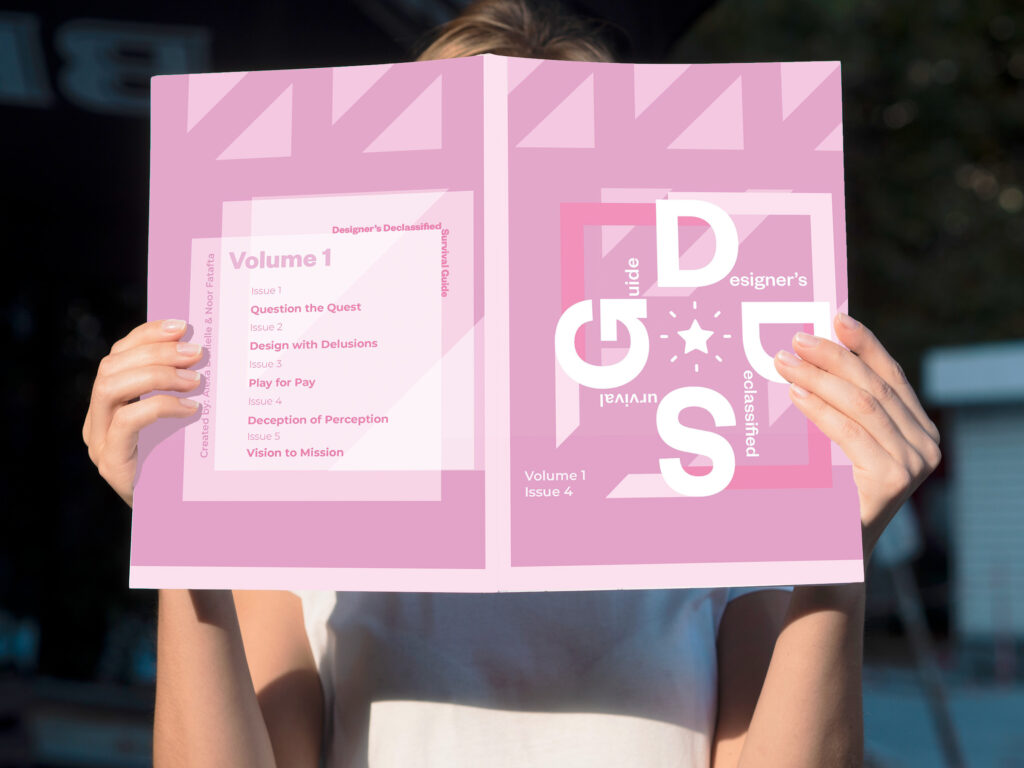
Designer’s Declassified Survival Guide is a call to action for inner transformation. Not only does it inform entry-level UX design professionals of mental health and circumstantial controversy associated with UX design work in industry but also provides reassurance and assistance on how to sustain mental health. Pamphlet 1, Question the Quest, reinforces the importance of discovering the essential problem when conducting contextual research. Pamphlet 2, Design with Delusions, recognizes the detrimental impacts of ‘imposter syndrome’ as a designer and how to mitigate the symptoms. Pamphlet 3, Play for Pay, recognizes the tendency of falsely conducting UX research and how to rectify. Pamphlet 4, Deception of Perception, confirms the value of designers and how to maintain confidence. Pamphlet 5, Vision to Mission, informs designers of their seat at the executive table and how to effectively stand in their authentic power.
Team Roles
As a designer, Alexa discovered and utilized the official design language system for SXSW and applied their Southwest facing arrow logo and hex code color palette to our project. Alexa created the textured arrow background in photoshop, constructed all the design elements, and assembled them in InDesign. Collectively, we sketched out layout concepts, ideated, and decided the design direction and iconography. I designed the interactive/gamified portions for each of the booklets, generally located in section two of the pamphlets.
As a researcher, I discovered and curated the body copy, organization, and language for the pamphlets by researching, analyzing, synthesizing, and editing reputable articles. I constructed and labeled the three-part organizational structure, coined the titles and headers, and created the informational hierarchy. Collectively, we ideated and decided on the terminology, language style, and interactive portions of the series.
Preliminary Guidelines & Processes
What will be our overarching concept for our pamphlet series? Through our concept deliberation and research, we acknowledged the desire to create a series to help guide entry-level UX designers by displaying transparency on less prevailing topics in relation to UX professionalism and industry. As aspiring UX professionals, we admit to occasionally suffering from imposter syndrome due to personally perceiving a great amount of pressure to rapidly perform, produce high quality deliverables, and feelings of uncertainty when observing the work of our peers’ or from receiving critique. Through research we discovered we are not the only designers experiencing symptoms of imposter syndrome. Once establishing imposter syndrome as one of four pamphlet topics, we discovered the other four topics by reading and researching the internal and external experiences of individual UX design professionals in industry. We adopted and re-organized published articles from various sources for our pamphlet copy. “Designing with Delusions” and “Deception of Perception” review the internal challenges of feeling like an imposter and reminding ourselves of our value as individual designers. “Pay for Play” and “Vision to Mission” review the external experiences of the circumstantial inability to properly perform UX research and navigating designer’s newly founded capacity to influence executive decisions.
Who should our client be? Once our concept was defined, we identified numerous editorial organizations that either focus on tech, design, and/or UX. Since we established our target audience as entry-level UX design professionals, we aimed for an entity that matched our target audience demographics. Through Alexa’s personal experience living in Austin, Texas, she informed me of South by Southwest. South by Southwest (SXSW) is a one week annual festival and conference event, always held during spring break, that celebrates and informs the convergence of tech, film, music, education, and culture. By utilizing the SXSW 2019 demographics report, we discovered the majority of attendees (34%) are between the ages of 26-34, work for large businesses (40%) either as management or creative development (22%), and retain some degree of decision making power (20%-25%). Our unique client focus inspired our design direction through incorporating the elements of the SXSW logo and color palette from their design system in our pamphlets. We also were influenced by the various printed materials we collected at the SXSW conference.
How do we create a pleasurable user experience with our pamphlets? Since SXSW is an interactive, in-person experience event with an online presence, we envisioned a tech/cultural conference session held in commemoration of “Designer’s Declassified Survival Guide” (DDSG). We believe the individual UX professionals who wrote and published the articles that we adopted as copy for our pamphlets could further reveal their industry experience while offering the audience our printed pamphlets. Alexa and I attended SXSW 2022 to conduct field research. With our interactive badges, we picked up every printed SXSW handout available to later analyze their design, language style, and organizational structure. We attended multiple conference sessions and meet ups that we deemed relevant to DDSG, such as the “Do Work You Love Without Burn Out (It’s Possible)!” conference hosted by Nataly Kogan (Founder & Ceo of Happier, Inc), the imposter syndrome meet up session and “Get Unstuck: Harnessing The Power of New Perspectives” conference hosted by Lia Garvin (Lia Garvin Consulting LLC). When we were not attending conferences and meetups, we explored the downtown Austin area and conversed with other attendees, analyzing its overall organization, structure, and audience to ensure our series aligned with our chosen partner. In addition, we wanted our pamphlets to be engaging on their own in case individuals were unable to attend the conference session and/or to retain the individual’s interest in the pamphlet series once the conference concluded. That is why we created and incorporated a reader’s interactive section in each pamphlet, like puzzles and quizzes.
1.) Question the Quest (Coming Soon)
Designer’s Declassified Survival Guide begins with the basics by introducing the significance of conducting proper contextual research by refining the practice of asking meaningful questions and how to answer questions in regards to design decisions accordingly. The decision to open the series with integral contextual research is because design research is vital to all forms of designs. Particularly with user experience design, researchers must be intensely sensitive, observant, goal oriented, and organized due to the high complexity of our designs and ability to cater the expansive possible scenarios, environments, and user groups in which impact the usability.
Body Copy Source(s): “UX Design — Question everything.” Adam Ascroft, 16 September 2019 (Medium.com) https://medium.com/inktrap/ux-design-question-everything-6c8486c2496b





2.) Design with Delusions
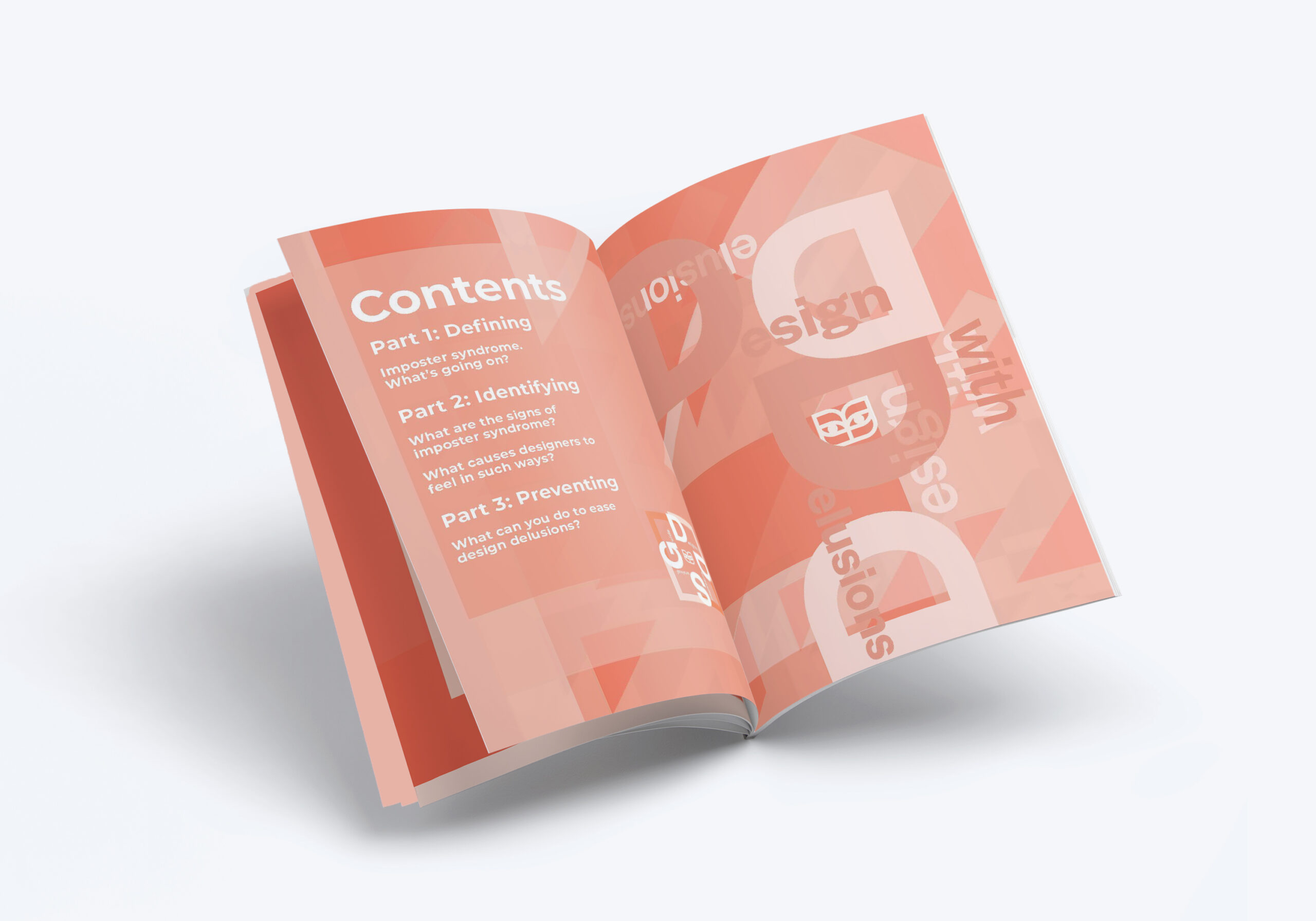
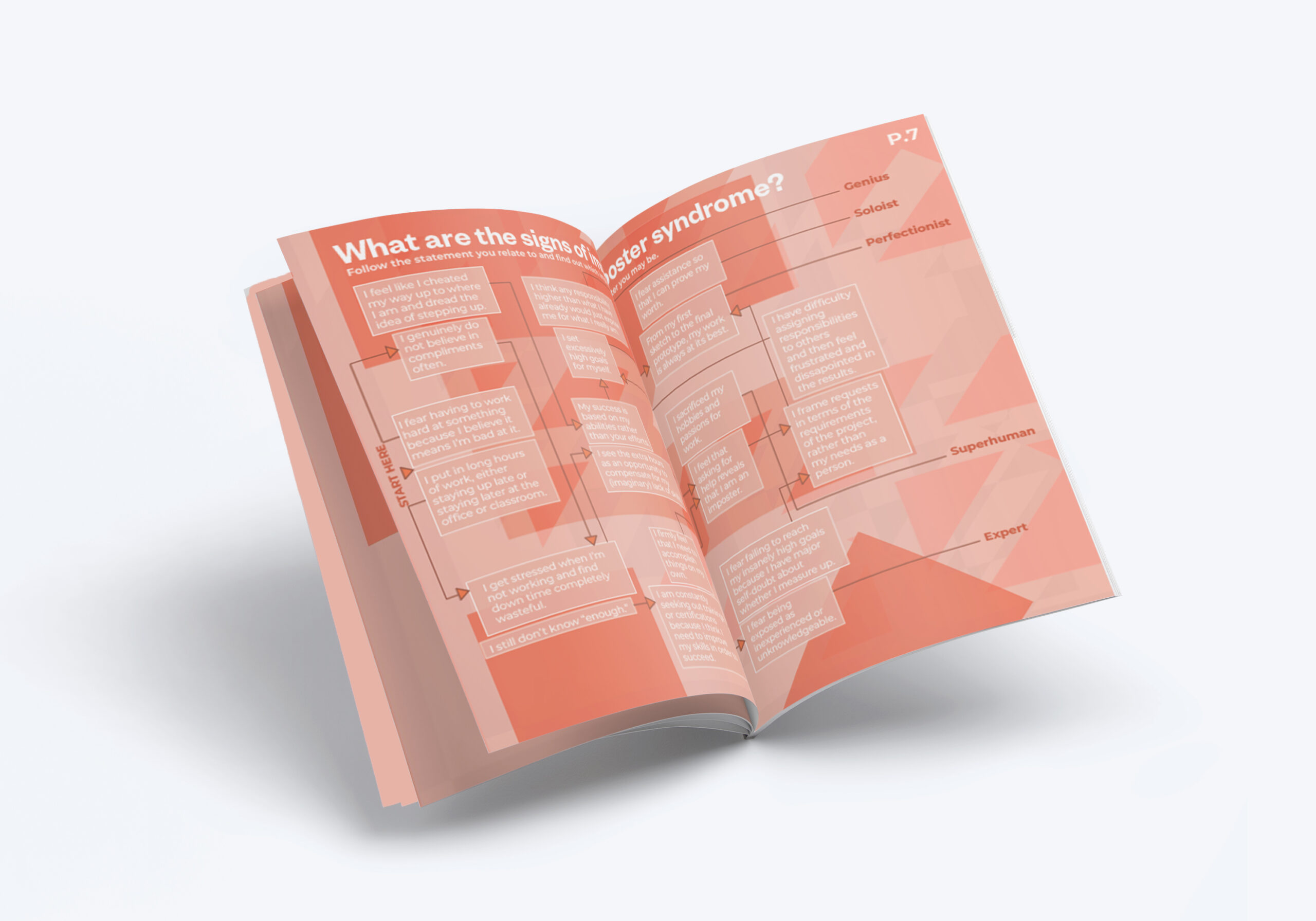
Following the emphasis on contextual research through the exploration of curiosity is the condition of imposter syndrome, which is commonly experienced by designers. Due to the highly competitive industry, perplexing creations, and subjective or abstruse data collection, it is elementary to feel as if you are a fraud and, generally, that is not the case. Designers often do not open up about this feeling due to its vulnerability, however, we believe it is important to normalize this experience, open up the discussion, and support one another. In addition, to enhance audience engagement, and user centric design, this pamphlet includes an imposter syndrome quiz to allow readers the opportunity to find out which kind of imposter they are.
Body Copy Source(s): “How to deal with Imposter Syndrome if you’re a Designer” Costin Iorgulescu, 28 January 2019 (Medium.com) https://uxdesign.cc/how-to-deal-with-the-imposter-syndrome-if-youre-a-designer-e4bd48f3ef8d
“Imposter Syndrome in Design: What is it and How to Overcome it” Jesse Prehodick, 21 June 2019 (Willowtreeapps.com) https://www.willowtreeapps.com/craft/imposter-syndrome-in-design-what-it-is-and-how-to-overcome-it



3.) Play for Pay
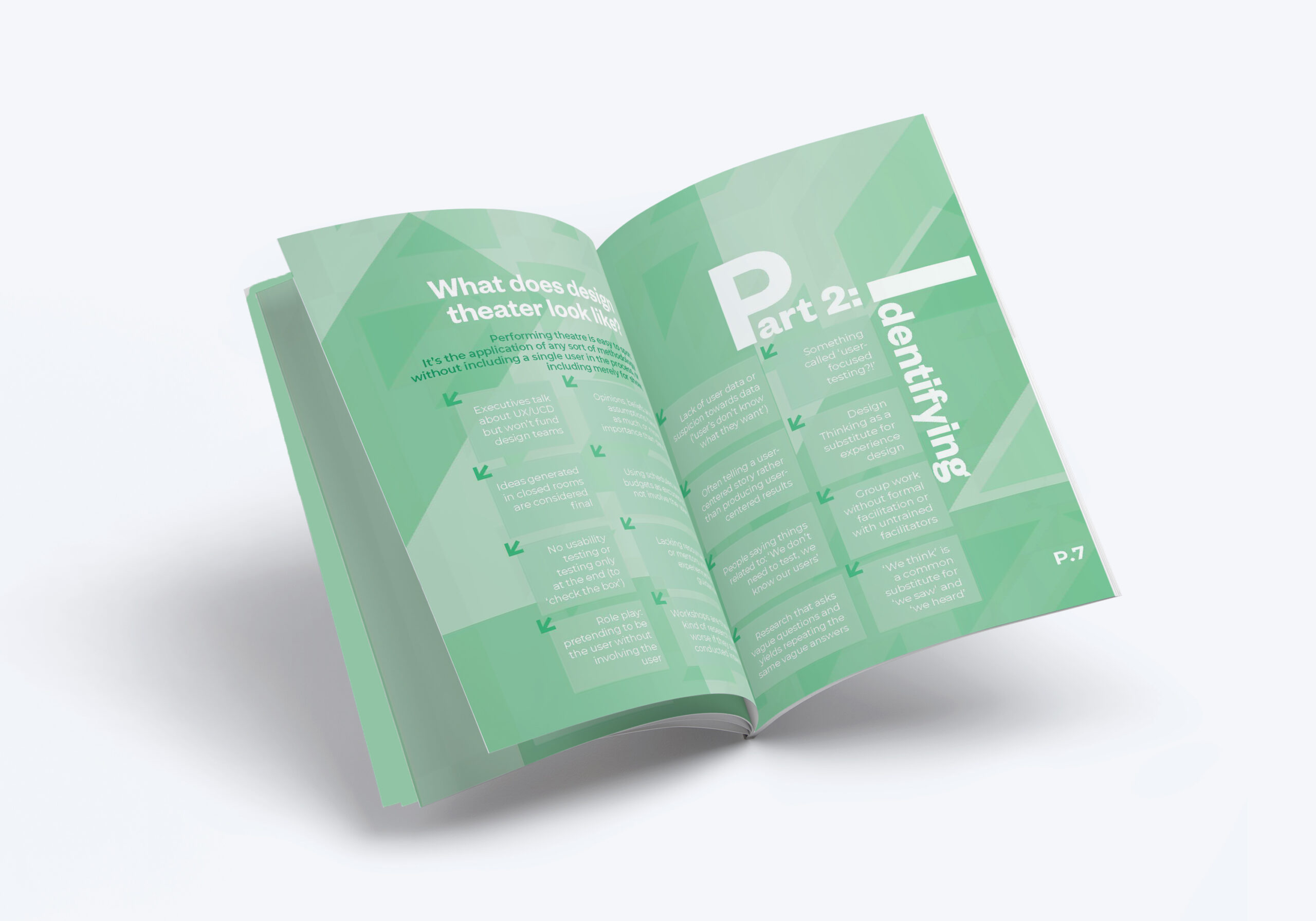
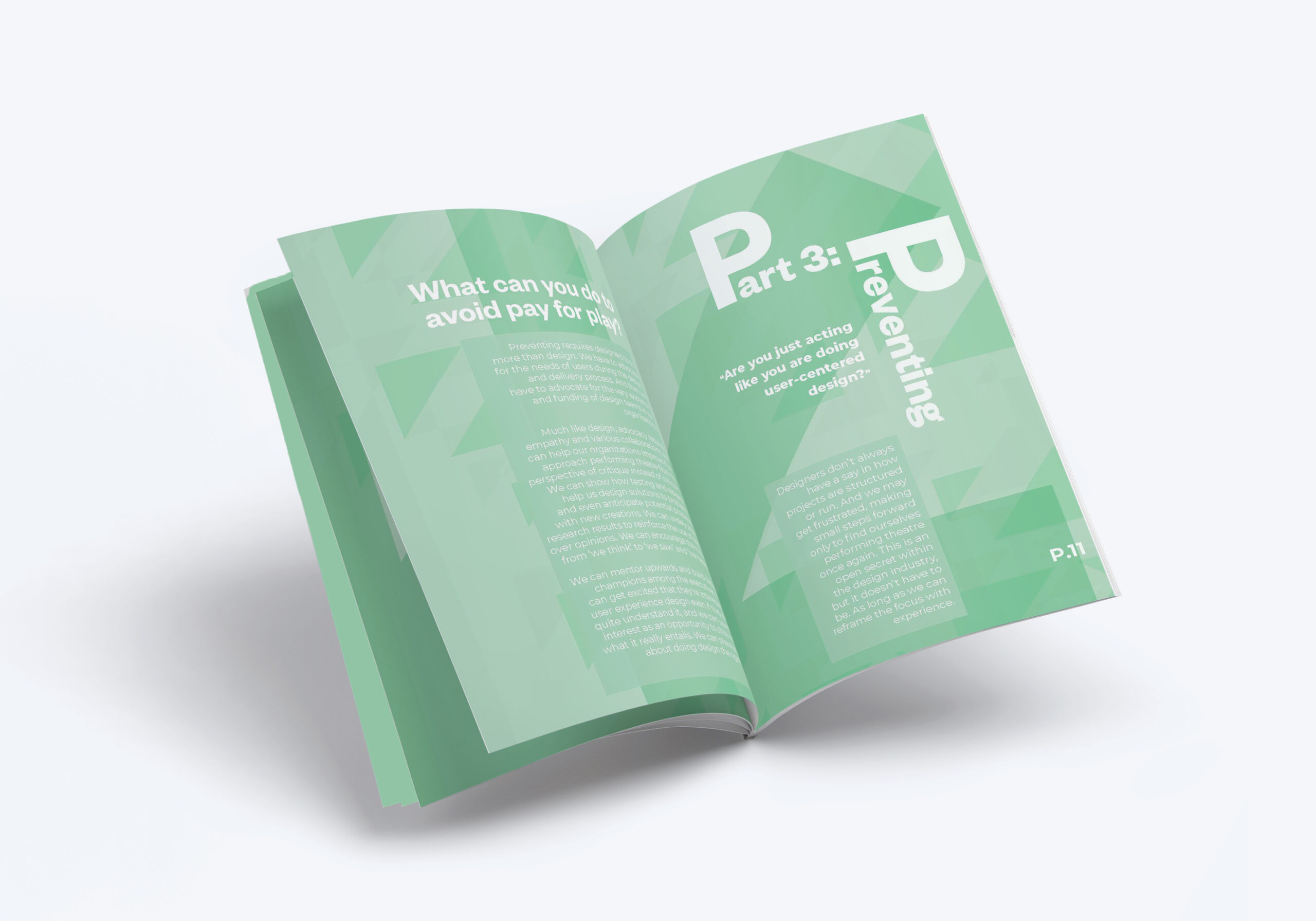
Contrary to feeling like an imposter, some designers are truly pretending they are creating user centric designs and, depending on the situation, it usually isn’t the designer’s fault. Some entities severely limit funding or dictate the direction of conducting UX research, which critically impacts the data collected and ultimately the final product. ‘UX Theater’ accompanies ‘imposter syndrome’ because it is fundamental to signify the massive difference between fraudulent design research performance and a skilled designer who perceives themselves as a fraud. The interactive portion featured in this pamphlet is a checklist of indicators that confirm ‘UX theater’.
Body Copy Source(s): “UX Design has a Dirty Secret” Tanya Snook, 18 October 2021 (FastCompany.com) https://www.fastcompany.com/90686473/ux-design-has-a-dirty-secret
“UX Theater: The Poster” Tanya Snook, ‘Spydergrrl’, 03 May 2020 (Spydergrrl.com) https://www.spydergrrl.com/2020/05/ux-theatre-poster.html



4.) Deception of Perception
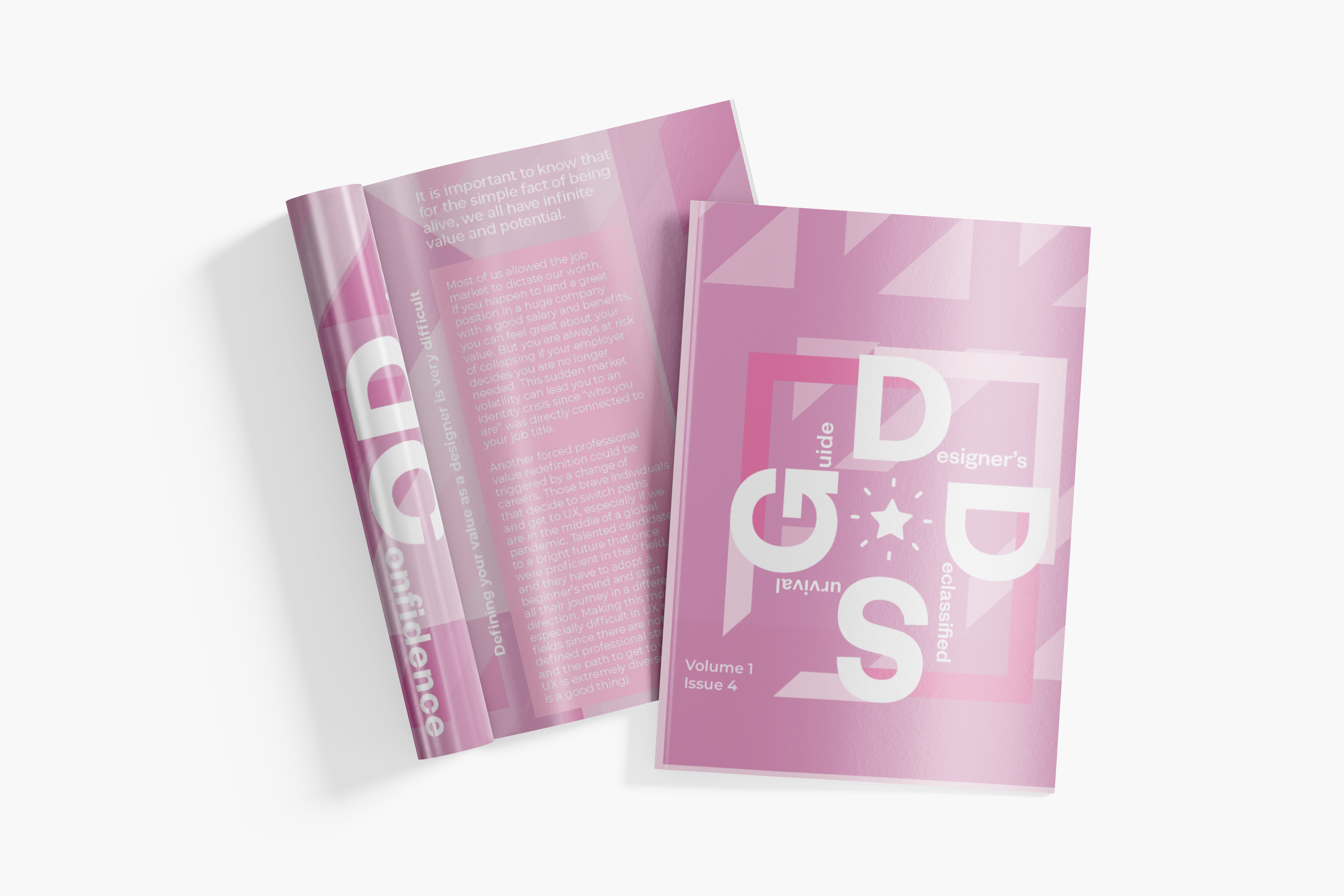
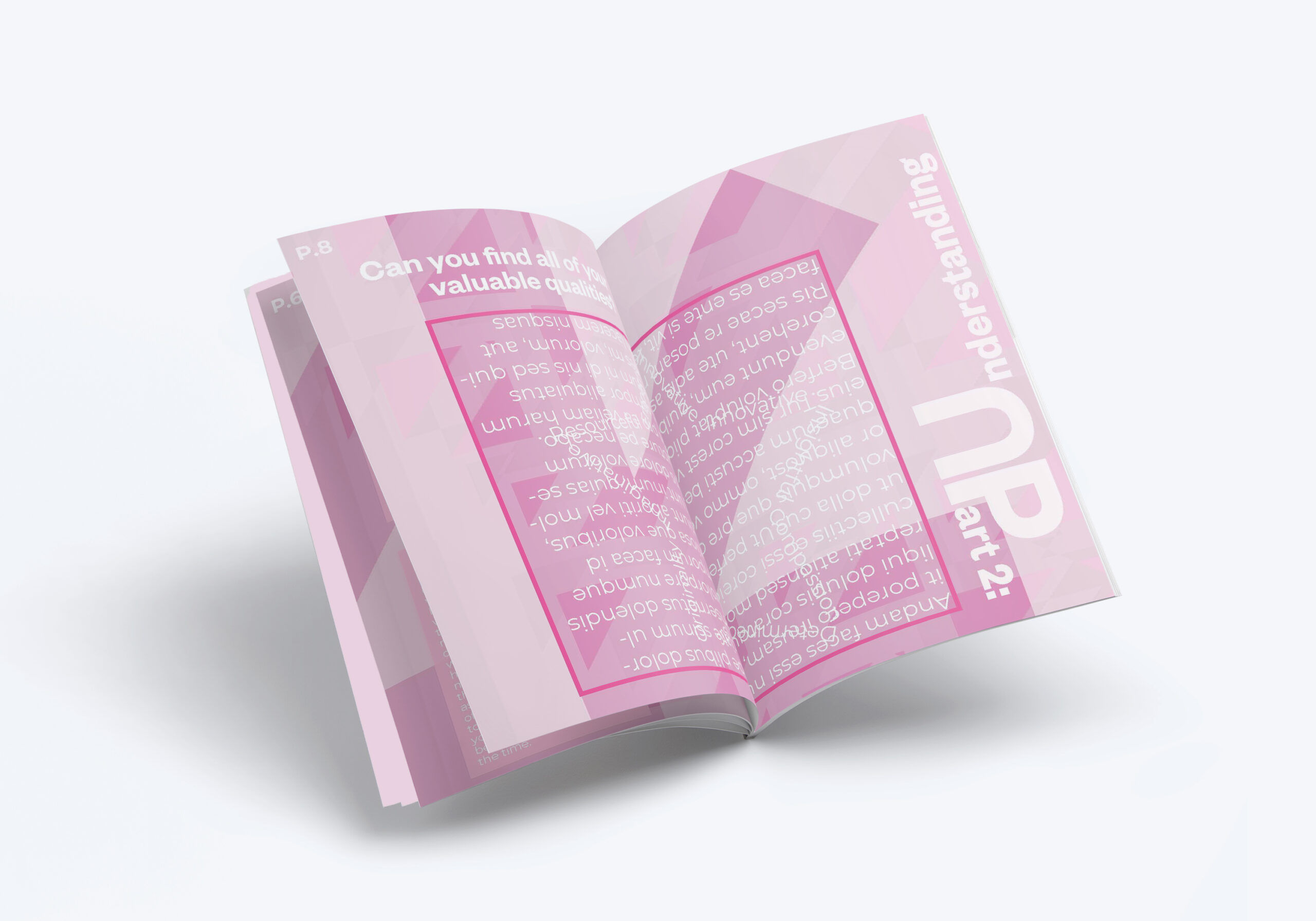
After defining the difference between suffering from imposter syndrome and UX theater, emotions might be conflicting. It is advantageous to remind ourselves, as designers, of our advantages. UX designers and UX researchers hold a significant position. We have developed certain qualities that allow us to empathize with users, identify pain points, and construct creative solutions. Similar to imposter syndrome, comparing ourselves to others creates self-doubt. We must remind ourselves that our differences are what make us unique. The interactive portion featured in this pamphlet is a hidden word identifying puzzle that reveals the valuable qualities of designers.
Body Copy Source(s): “Defining your Value as a UX Designer” Luis Berumen Castro,11 July 2020 (Meduim.com) https://uxdesign.cc/defining-your-value-as-a-ux-designer-954576013ee1




5.) Vision to Mission
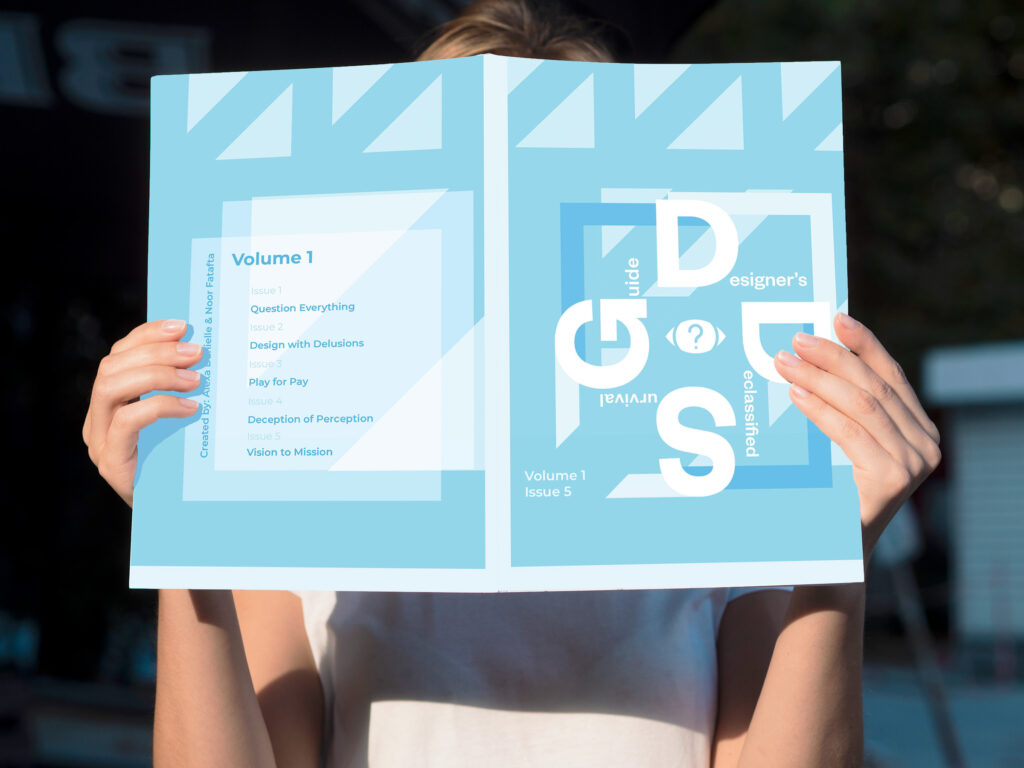
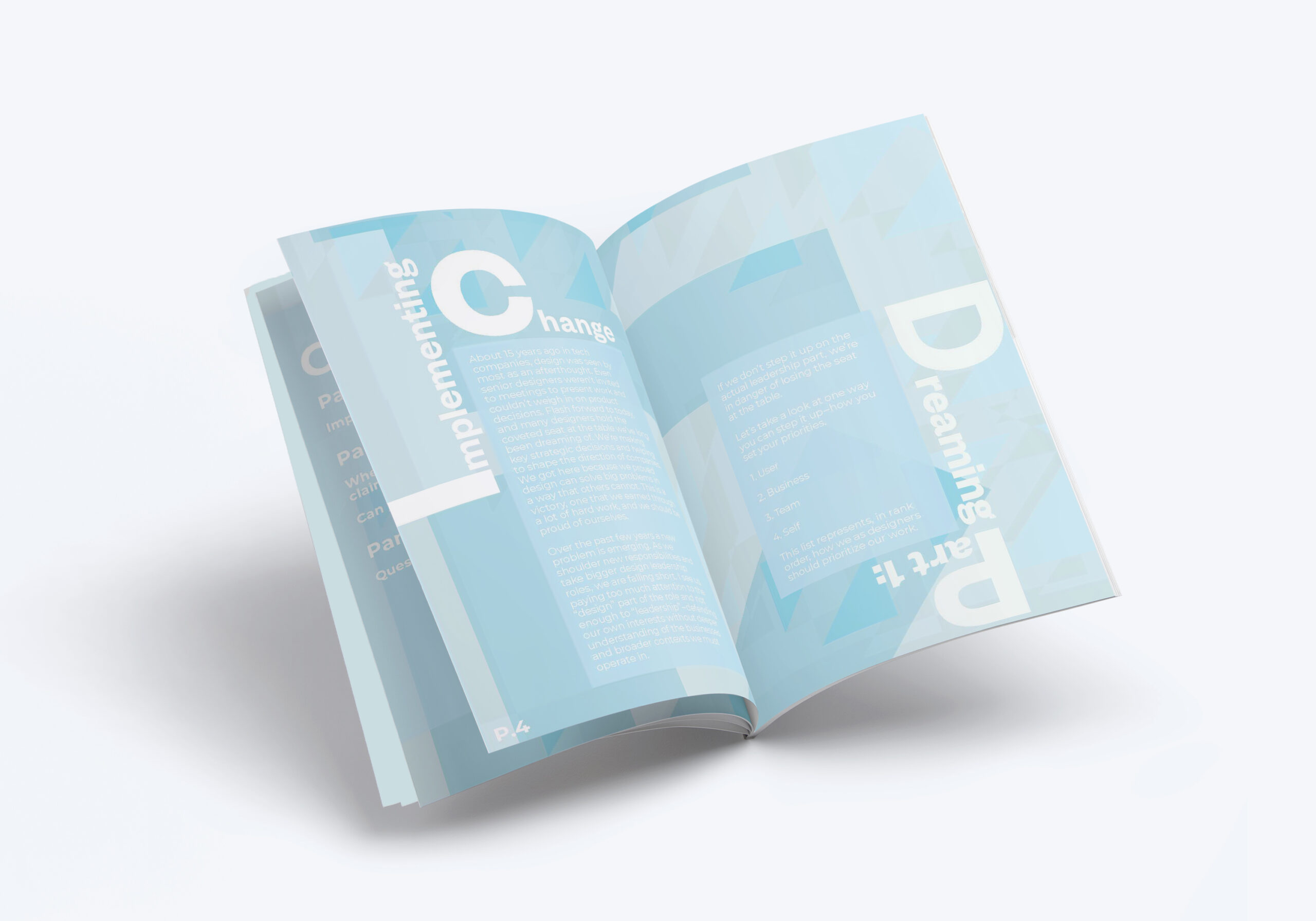
Once credibility and confidence are established, it is time to rise to action. Until recently, designers were not invited to the executive table because higher positions of power did not perceive designers to be of importance. However, we’ve known the sincere power of design and the influence it has and others are beginning to recognize that, too. Now that designers finally have a seat at the table, we are not only the advocate for design but we have to adapt our design thinking within the business perspective or else we might lose our seat at the table.
Body Copy Sources(s): “Designers Finally Have A Seat At The Table. Now What?” Kate Aronowitz, 08 January 2018 (FastCompany.com) https://www.fastcompany.com/90156186/designers-finally-have-a-seat-at-the-table-now-what
“You Have a Seat at the Table: Now What?” Cassini Nazir – Big Design Conference 2021 (BigDesignEvents.com) https://bigdesignevents.com/2021/09/08/you-have-a-seat-at-the-table-now-what/